
Beef Ragù
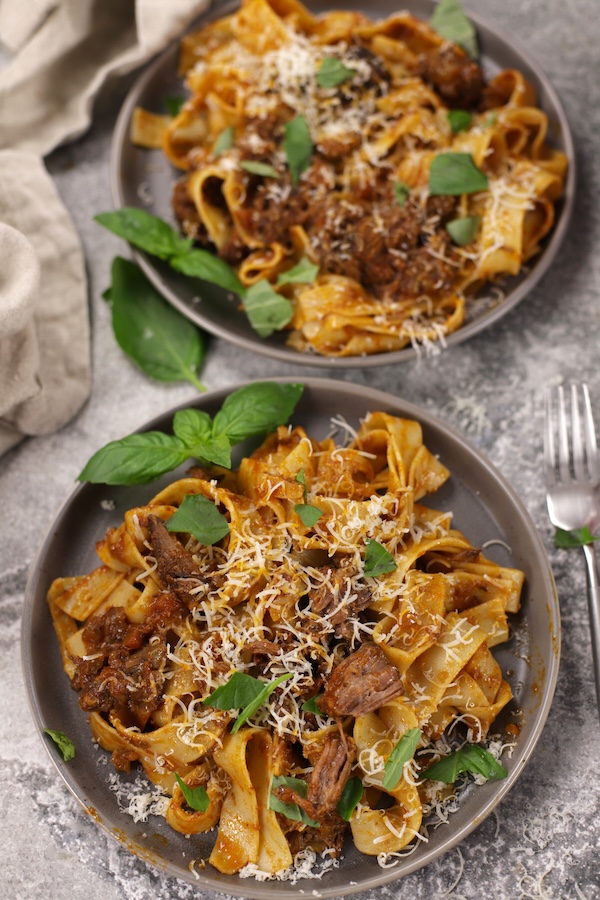
Beef Ragù is the ultimate Italian comfort food, slow-cooked until melt-in-your-mouth tender with a deeply flavorful sauce that clings to every strand of pasta. This homemade classic uses simple ingredients and just a few core steps, making it easy enough for beginners. All it takes is a little patience for a restaurant-worthy dinner that’s perfect for cozy nights in or sharing with family.
This post may contain affiliate links, meaning I earn a small commission if you make a purchase—at no extra cost to you. Additionally, AI was used to assist with spelling, grammar, sentence clarity, and creative brainstorming.
What is Beef Ragu?
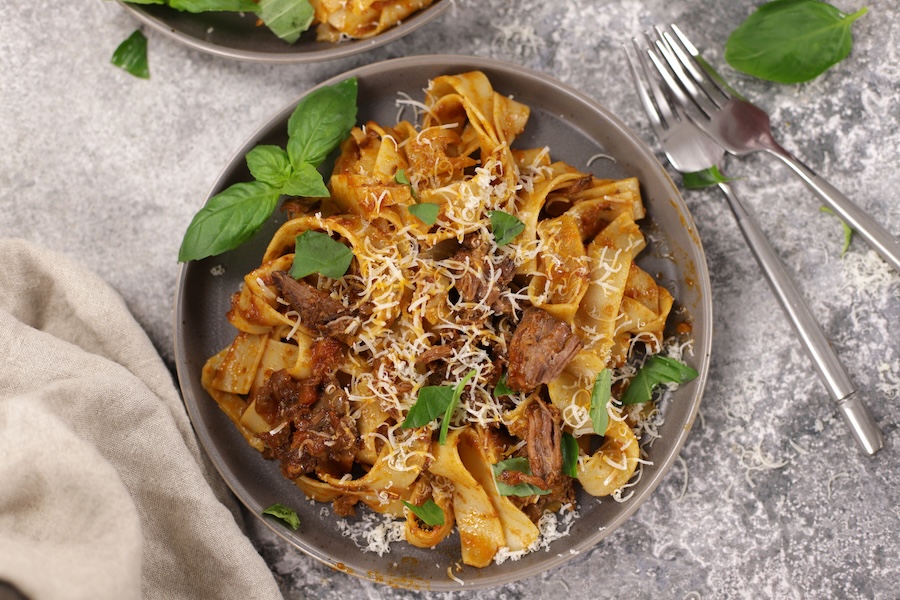
Beef Ragù is a classic Italian meat sauce, slow-cooked until the beef is fall-apart tender and the sauce is rich and savory. Built from simple ingredients like beef, tomatoes, red wine and fresh herbs, it’s the kind of dish that can turn any night into something special. Whether you’re cooking for a family or just want a taste of true comfort, making this meal at home is easier than you think and the results are always worth the wait. Serve it over wide or hearty pasta for a meal everyone will remember.
Best Meat Cuts for Beef Ragù
The secret to unforgettable Beef Ragù is choosing the right cut of meat. For the richest flavor and melt-in-your-mouth texture, look for well-marbled and collagen-rich cuts that become incredibly tender with slow cooking. The best choices are:
- Chuck Roast– This is a classic choice because it is flavorful, affordable and shreds beautifully after braising.
- Short Ribs– Adds a deep beefy richness and silky texture both thanks to the bones and collagen-rich meat. This cut is a little more expensive, but perfect when you want a true 5-star restaurant experience at home.
- Brisket– Slightly fattier, giving the sauce extra body and richness.
Avoid lean cuts like sirloin or round as they will dry out instead of turning silky. Stick with traditional options and you will be rewarded with a Ragù that tastes like it came from a cozy trattoria in Italy.
Which Pasta to Serve with Beef Ragù
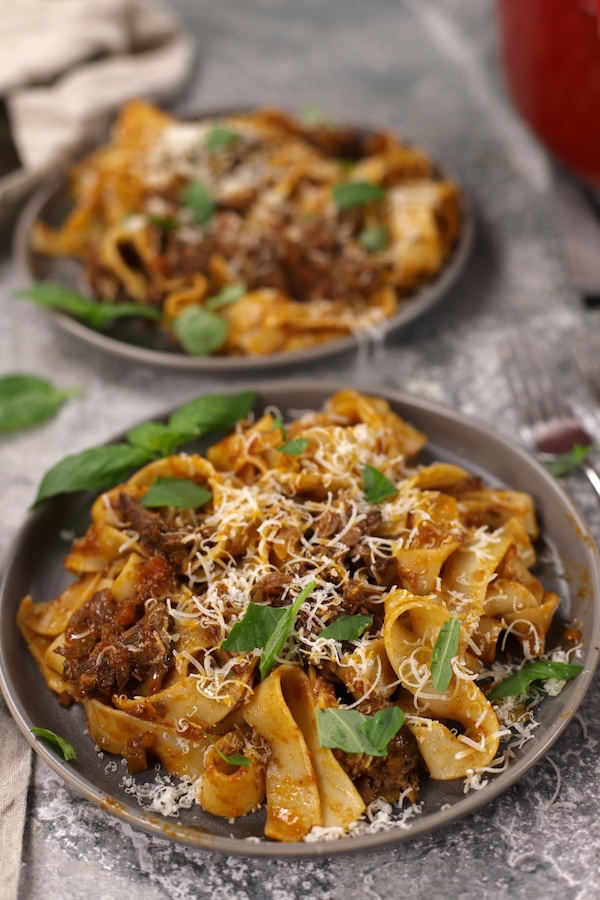
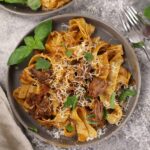
Pappardelle is the traditional favorite to serve with Beef Ragù because of its wide, flat ribbons that soak up the rich slow-cooked sauce beautifully. Additionally, their sturdy texture and broad surface match the hearty nature of Ragù.
Other Great Pasta Options
- Tagliatelle– Slightly narrower than pappardelle, but just as effective. If you can’t find pappardelle, tagliatelle is a superb second choice.
- Fettuccine– These flat noodles are more common and still do a good job, especially if they are fresh.
- Rigatoni– If you crave a chunkier experience, the short tubular shape of rigatoni holds the shredded beef and sauce very well.
Avoid thin or delicate shapes (like spaghetti or angel hair), as they drown under a hearty Ragù and the sauce can’t cling the way it should.
Pro Tip: For the best results, add about 1/2 cup of hot pasta water to the sauce before tossing in the pasta. The starchy water loosens the sauce just enough to coat the noodles evenly, giving you that silky, restaurant-quality finish.
Most Helpful Kitchen Equipment Needed
Ingredients Needed
Searing the Meat
- Chuck Roast– An affordable cut that is perfect for Ragù, chuck roast is naturally rich in fat and collagen. Look for a well marbled cut, as this will make the sauce rich and the beef incredibly tender.
- Kosher or Flaky Salt– Seasoning the beef with salt before searing draws out excess moisture, helps form a flavorful crust and ensures the meat is well seasoned all the way through.
- Black Pepper– Adds a gentle heat and complexity to both the meat and sauce.
- High Heat Oil– Using a neutral, high-smoke point oil like avocado oil allows you to sear the beef deeply without burning, creating a rich, flavorful crust that forms the foundation of a truly great Ragù. While olive oil is traditional, high-heat oil is a secret for perfect browning.
For the Sauce
- Brown Onion, Celery and Carrot– Finely dice and cook these together slowly to create a classic soffritto, the Italian flavor base that add sweetness, depth and rich aroma to the Ragù. The key is to cook the vegetables slowly so they soften and release their flavors without browning.
- Garlic– Freshly minced or crushed garlic adds a gentle, aromatic kick that enhances the savory depth of the Ragù without overpowering the other flavors.
- Tomato Paste– Cooking the paste until it darkens and smells rich brings out its natural sweetness and umami flavor. Look for a fragrant, slightly caramelized aroma before adding the next ingredients. Pro Tip: Double-concentrated tomato paste is best for bold flavor.
- Dry Red Wine– Use a good drinkable red wine (such as Chianti or Cabernet) adds subtle acidity, complexity and helps to balance the richness of the beef. Pro Tip: Avoid “cooking wine”, which can taste harsh or salty. Let the wine simmer and reduce by half. This cooks off the alcohol, leaving behind the concentrated savory flavor.
- Crushed Tomatoes– Choose a high-quality brand for sweetness and a clean tomato flavor.
- Beef Broth– Low sodium lets you control sodium levels. Homemade gives the richest flavor, but store-bought is fine.
- Thyme and Bay Leaf– These herbs add a subtle, fresh flavor that gives your sauce a more complex and “restaurant-quality” taste. Pro Tip: If using dried thyme, use about 1/2 to 1 teaspoons instead of fresh, since dried herbs are more potent.
- Parmigiano Reggiano Rind– Adding a chunk of parmesan rind to the sauce as it simmers adds a richness that makes Ragù irresistible. This is a classic chef’s trick for giving your dish the “can’t-stop-eating” quality. Just Remember to take the rind out before serving.
Finishing the Dish
- Pasta– Wide noodles like pappardelle are best for holding the hearty sauce, but any sturdy pasta will work. Pro Tip: Cook the pasta until just shy of al dente (a little firm to the bite), since it will soften more when mixed with the hot Ragù.
How To Make Beef Ragù
To make an authentic Beef Ragù, start with chunks of beef chuck or short ribs, seasoned and seared in a heavy pot until deeply browned. This step creates maximum flavor. Remove the beef, then cook a soffritto of onion, carrot and celery in the fond over medium heat until soft and aromatic. Stir in tomato paste and garlic to build depth, then red wine and reduce by about half.
Return the beef to the pot along with crushed tomatoes, fresh thyme, a bay leaf and enough beef broth to cover. Cook cover in a 300℉ oven until the meat is meltingly tender and easy to shred. Stir the shredded beef back into the sauce and allow it to rest, so the flavors meld beautifully. Serve with your favorite pasta and finish with parmesan cheese, a drizzle of olive oil and fresh basil. This slowed-cooked Italian Beef Ragù is the ultimate homemade comfort food that is perfect for cozy nights or impressing guests.
What To Serve with Beef Ragù
Beef Ragù is the kind of meal that feels special any time you make it, whether you’re planning a cozy night at home, hosting friends for a dinner party, celebrating the holidays with family, or setting the table for a romantic evening. Its rich, slow-cooked flavors and comforting aroma make it a true crowd-pleaser for gatherings big and small.
To turn your Ragù into a complete Italian-inspired feast and pair it with:
- Fresh Bread– Warm, crusty Sourdough Baguettes are perfect for soaking up every drop of the luscious sauce.
- Side Salad– A simple savory salad, like Arugula Pear Salad, or a classic green salad with Homemade Croutons brings a refreshing contrast and balances the richness of the Ragù.
- Roasted or Steamed Vegetables– Add color and freshness with sides like roasted cauliflower, broccoli, green beans or asparagus.
- Polenta or Mashed Potatoes– For a comforting twist, serve your Ragù over creamy polenta or buttery mashed potatoes.
- Wine and Drink Pairing– A classic Italian red wine like Chianti or a full-bodied Cabernet Sauvignon is perfect with Beef Ragù. If you want a refreshing Italian twist, a Limoncello Spritz is light, citrusy and a wonderful palate cleanser. For a non-alcoholic option, serve with Homemade Iced Tea for a crisp contrast.
- Finishing Touches– Top with plenty of freshly grated Parmigiano Reggiano, a drizzle of good olive oil and a sprinkle of fresh herbs for color and aroma.
- Dessert Pairings– Finish your meal with a frosty Sgroppino, a slice of Italian Lemon Pound Cake, or a piece of rich Chocolate Cake. Each is a perfect way to end an Italian-inspired dinner.
Top Tips
- Prep First, Cook Second– Professional kitchens prep every ingredient (mise en place) before turning on the heat. Washing, measuring and chopping first makes cooking relaxed with a much smaller chance of making mistakes.
- Brown Meat Deeply, Not Quickly– Browning (the Maillard reaction) builds rich, complex flavor. Pat the beef dry, season well and don’t overcrowd the pan. Let each side develop a dark, crusty sear by not moving the meat until it naturally releases.
- Cook the Soffritto Slowly– Gently cooking the onion, carrot and celery brings out sweetness and forms the sauce’s backbone. To do this use medium heat, stir often and be patient. This step takes time but rewards you with layers of flavor.
- Reduce Wine by Half Before Adding Crushed Tomatoes– Raw wine can taste harsh. Reducing it lets the alcohol cook off and concentrates the wine’s fruity, savory notes.
- Rest the Sauce Before Serving– Allowing the sauce to rest for 15-30 minutes before tossing in the pasta allows the flavors to meld and the sauce to thicken to a luxurious consistency.
- Entertaining Tip– Beef Ragù is even better the next day, making it an ideal make-ahead dish for the holidays, celebrations, or when you want more time to enjoy your guests and the evening.
Storage and Shelf Life
Beef Ragù is one of those dishes that tastes even better the next day, making it perfect for leftovers and meal prep.
Refrigerator Storage
Store cooled Ragù in an airtight container in the refrigerator for up to 4 days.
Freezer Storage
For longer storage, freeze portions of the sauce (without pasta) in airtight containers or freezer bags for up to 3 months. Thaw overnight in the fridge before reheating and then add to freshly cooked pasta.
Reheating
Reheat gently on the stovetop or in the microwave, adding a splash of water or broth if the sauce has thickened.
Frequently Asked Questions
Can I use a different cut of Beef?
Yes, you can use other slow-cooking cuts like brisket or short ribs. Just make sure the beef has good marbling, as this ensures a tender, flavorful Ragù after long, slow cooking. Avoid lean cuts, which can turn out dry.
Do I have to sear the beef for Ragù?
Searing the beef isn’t absolutely required, but it’s highly recommended. Searing creates a deep, rich flavor in the meat and sauce that you can’t achieve otherwise. For the best-tasting Ragù, don’t skip this step.
What can replace the wine?
You can substitute beef broth or a mix of beef broth and a splash of balsamic vinegar for the wine. This keeps the sauce rich and flavorful while adding a bit of acidity.
How long will this take to cook from beginning to end?
From prepping ingredients to finishing the sauce, Beef Ragù typically takes about 3 1/2 to 5 hours. Most of this time is hands-off while the Ragù simmers and develops its deep flavor.
When is the best time to serve Beef Ragù?
Beef Ragù is perfect for special occasions, holidays, dinner parties, or cozy nights at home. It’s especially great when you want a comforting, make-ahead meal that impresses guests and tastes even better the next day.
Can I make Beef Ragù in a slow cooker?
Yes! Sear the beef and sauté the vegetables on the stovetop first, then transfer to the slow cooker and cook on low for 7-8 hours or high for 4-5 hours.
Why is braising important for Beef Ragù?
Braising is the key technique behind a melt-in-your-mouth Beef Ragu. It starts with searing the beef to develop rich flavor, then slow-cooking it in liquid until the meat becomes tender and deeply flavorful. This method helps the beef absorb all the aromatic ingredients while keeping it moist, resulting in the classic, luscious sauce that makes Ragu so comforting.
How do I thicken or thin the sauce if needed?
To thicken the sauce, simmer it uncovered until it reduces to your desired consistency. To thin it, stir in a splash of beef broth, pasta water, or even a bit of water until it’s just right.
What’s the best way to reheat this dinner?
Reheat Beef Ragù gently on the stovetop over low heat, stirring occasionally until hot. If the sauce is too thick, add a splash of water or broth. You can also reheat it in the microwave in short intervals, stirring between each one for even heating.
Beef Ragù
Equipment
Ingredients
- 2 1/2-3 pounds chuck roast *cut into large chunks, see Note #1 below
- Kosher salt, to taste *or flaky salt
- black pepper, to taste
- 2-3 tablespoons high heat oil *such as avocado
- 1 large brown onion (aka yellow onion) *finely diced, about 1 1/2 cups
- 2 large carrots *finely diced, about 1 cup
- 2 stalks celery *finely diced, about 1 cup
- 4 cloves garlic *minced or crushed, about 2 tablespoons
- 3 tablespoons tomato paste
- 1 cup dry red wine
- 1 (28 ounce) can crushed tomatoes
- 2 cups beef broth
- 4 sprigs fresh thyme *or 1 teaspoon dried
- 1 bay leaf
- Parmigiano Reggiano rind *optional but an excellent addition, see Note #2 below
- 1 pound Pappardelle pasta
Instructions
Season and Sear the Beef
- Pat the roast dry with paper towels. Season all sides generously with kosher salt and black pepper.
- Heat a heavy-bottomed enameled Dutch oven over medium-high heat and add a small amount of oil, enough to coat the bottom.
- Sear the beef in batches until deeply browned on all sides. Remove and set aside. See Note #3 below.
Build the Soffritto
- Lower heat to medium. Add the onion, carrots and celery.
- Cook, stirring often, until the veggies are very soft and sweet but not caramelized, about 12-15 minutes. See Note #4 below.
Add Tomato Paste and Garlic
- Stir in the tomato paste and cook for 2-3 minutes, until it darkens and smells rich.
- Add the minced garlic and cook for about 30 seconds, just until fragrant.
Deglaze with Wine
- Pour in the red wine, scraping up any browned bits from the bottom of the pot. Simmer until the wine is reduced by at least half and no longer smells of alcohol.
Slow Braise
- Return the beef to the pot. Add crushed tomatoes, thyme, bay leaf and enough beef broth to just barely cover the meat. (Add Parmigiano Reggiano rind now, if using.) Bring to a gently simmer.
Cook Low and Slow
- Cover the pot and cook on low heat for 2½–3½ hours, stirring occasionally, until the beef shreds easily. (Alternatively, transfer to a 300℉ oven for the same amount of time.)
Shred Beef
- Remove herb stems and bay leaf. Shred the beef using two forks and stir into sauce. The sauce should be thick, glossy and deeply savory.
Rest the Sauce
- Turn off the heat and let Ragù rest for 15-30 minutes to allow the flavors to deepen.
Cook and Finish with the Pasta
- Boil pasta until just shy of al dente. Using tongs (or a spider strainer), transfer pasta directly to the Ragù with about 1/2 cup of pasta water, if needed. Toss gently and garnish with freshly grated parmesan, a drizzle of good quality olive oil and torn basil leaves.